Category: Compliance Standards

Staying informed about all of the cyber security compliance standards is essential to keeping your company safe from hackers. Read on to learn about the various steps you can take to stay up to date with your industry’s compliance standards.

  • SOC 2 Type 2 Controls List and Audit Prep, Simplified

    SOC 2 Type 2 Controls List and Audit Prep, Simplified

    Successfully completing a SOC 2 Type 2 audit requires careful planning and execution. Preparation ensures your organization meets compliance standards and avoids delays during the assessment. The four essential steps include:

    1. Define the scope: Clearly establish the implementation and assessment boundaries for your SOC 2 Type 2 audit.
    2. Implement Common Criteria controls: Apply the necessary controls from the SOC 2 Type 2 controls list.
    3. Apply additional required controls: Implement any extra controls that may be required for your organization.
    4. Conduct the assessment and report findings: Complete the audit process and generate a comprehensive SOC 2 compliance report.

    (more…)

  • The Purpose and Benefits of the NIST AI Risk Management Framework (AI RMF)

    The Purpose and Benefits of the NIST AI Risk Management Framework (AI RMF)

    Artificial Intelligence (AI) is transforming how businesses operate—but with innovation comes risk. From biased decision-making to security vulnerabilities, AI systems introduce a new frontier of ethical, operational, and regulatory challenges. That’s where the NIST AI Risk Management Framework (AI RMF) comes in.

    (more…)

  • How to Meet the SOC 2 Trust Services Criteria Efficiently

    How to Meet the SOC 2 Trust Services Criteria Efficiently

    Meeting the SOC 2 Trust Services Criteria ensures your organization aligns with client expectations for data security and risk management. Efficient implementation requires scoping your audit correctly and prioritizing the controls that matter most for your specific SOC 2 report.

    Are you confident your SOC 2 assessment process is fully optimized? Request a consultation to ensure your controls meet the SOC 2 Trust Services Criteria effectively.  (more…)

  • Is Your Business Ready for CPPA? California’s New Privacy Audit Rules Explained

    Is Your Business Ready for CPPA? California’s New Privacy Audit Rules Explained

    The California Privacy Protection Agency (CPPA) has finalized regulations that represent the most significant shift in California’s privacy landscape since the introduction of the CCPA. Under the amended California Consumer Privacy Act (CCPA), now bolstered by the California Privacy Rights Act (CPRA), businesses are facing new, enforceable mandates for cybersecurity audits, risk assessments, and executive-level accountability.

    (more…)

  • How to Conduct a SOC 2 Gap Assessment

    How to Conduct a SOC 2 Gap Assessment

    System and Organization Controls (SOC) reports play a critical role in third-party risk management, with SOC 2 standing out as the go-to compliance framework for Software-as-a-Service (SaaS) providers and other service organizations. But even if your team has started down the road to SOC 2 readiness, there’s one step that can make or break your audit success: a SOC 2 gap assessment.

    (more…)

  • SOC 2 for Startups: Navigating the Compliance Journey

    SOC 2 for Startups: Navigating the Compliance Journey

    In a digital landscape where trust drives business, startups can’t afford to treat data security as an afterthought. Early-stage companies face intense pressure to prove their reliability—to customers, investors, and partners—all while scaling quickly and managing limited resources. Achieving SOC 2 compliance is more than a checkbox exercise; it’s a strategic signal that your organization takes data protection seriously and is built for sustainable growth.

    (more…)

  • What Is A Data Protection Officer?

    What Is A Data Protection Officer?

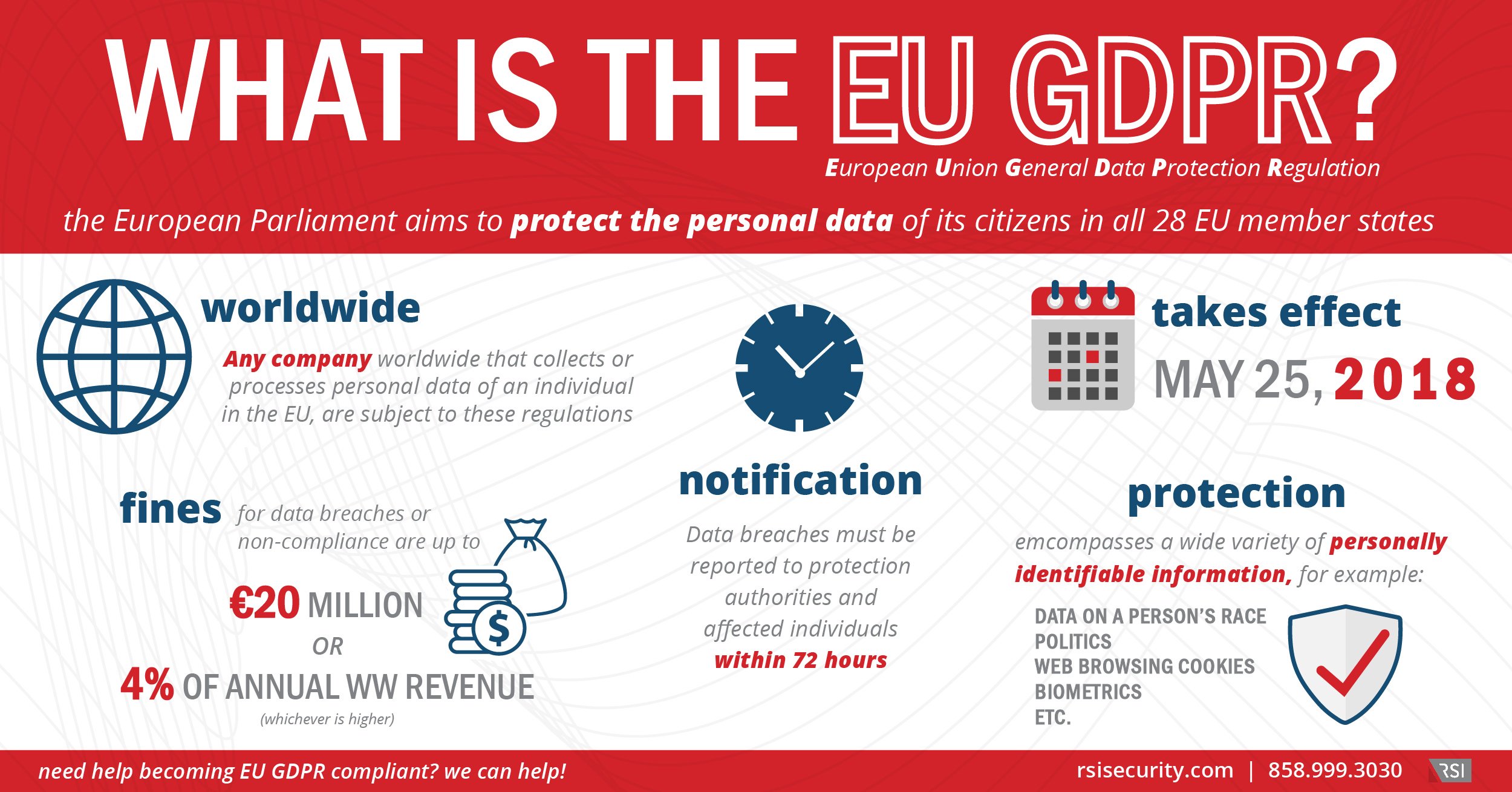
    The European Union’s General Data Protection Regulation (GDPR) requires certain organizations to designate a Data Protection Officer (DPO) to oversee compliance. The DPO plays a crucial role in ensuring an organization adheres to GDPR’s strict requirements regarding data privacy, security, and governance.

    (more…)

  • Understanding GDPR Compliance and the Role of a Data Protection Officer (DPO)

    Understanding GDPR Compliance and the Role of a Data Protection Officer (DPO)

    Many U.S.-based businesses underestimate the impact of the General Data Protection Regulation (GDPR), which took effect on May 25, 2018. Executives often assume that since their operations are based solely in the United States, this European Union (EU) law does not apply to them. While this is true in many cases, there are significant exceptions for businesses with digital operations that process or store the personal data of EU citizens.

    (more…)

  • How to Leverage HITRUST for Third-Party Risk Management

    How to Leverage HITRUST for Third-Party Risk Management

    For organizations that rely on vendors, service providers, and strategic partners, third-party risk is one of the most persistent and difficult cybersecurity challenges. HITRUST helps solve that challenge by providing a standardized, scalable, and proven assurance framework to evaluate and trust third parties — without rebuilding your third party risk management (TPRM) process from scratch.

    (more…)

  • What Are the HITRUST AI Security Assessments?

    What Are the HITRUST AI Security Assessments?

    HITRUST recently released a new assessment catering to AI security. Building on the HITRUST approach, it provides high-level assurance and certifies an organization’s commitment to robust, continuously improving cyber defenses in the face of evolving threats related to AI technology.

    (more…)