With the rise of credit cards and online banking, financial theft has gradually shifted away from physical bank robberies to electronic payment fraud. Although payment cards facilitate convenient financial transactions for society, they also offer an ideal opportunity for threat actors to remotely steal a person’s identity or breach a companys information database. While all cybersecurity solutions are important, we want to first dive into how to increase your security across the payment card industry.
Category: Cybersecurity Solutions
Discover comprehensive cybersecurity solutions including threat detection, vulnerability management, AI-driven defense, and strategic implementation guides to fortify your organization’s defenses.
-

Protect Cardholder Data With Antivirus Software
What is Antivirus Software?
Lets face it, we are living in a highly technical age. Computers and digital technology surround us, cell phones that fit in our pockets have turned into full blown portable computers. There have been threats to computers just about as long as computers have been around. The first antivirus (AV) software was used to protect against just that, a computer virus. The name remains today, but there are far more malicious tools out there other than viruses. Modern anti-virus software protections can include shields against trojan horses, worms, spyware, adware, rootkits and can sometimes include guards against phishing.
-

Does a P2PE validated application also need to be validated against PA-DSS?
There were 1,579 data breaches with over 178 million records exposed in 2017 alone. That averages about four data breaches a day for the entire year of 2017. Let that sink in for a second. That amounts to a nearly 45% overall increase over 2016 figures. Thankfully, there are ways that you can avoid a data breach, but these figures still lend themselves to have a bit of sticker shock. One way that companies can protect themselves from payment card data breaches is protecting their cardholder data environment (CDE) via PCI (Payment Card Industry) DSS (Data Security Standard) compliance. Any organization or merchant that accepts, transmits or stores any cardholder data must comply with PCI DSS.
-

How Does Encrypted Cardholder Data Impact PCI DSS Scope?
Merchants need to protect the cardholder data that they collect and encryption is one of the ways this is accomplished. Encryption by itself is not enough to place data out of scope for PCI DSS. This blog will cover what a cardholder data environment is, how encrypted data is part of that environment, and how encryption fits into the scope of PCI compliance.
-

How often should you audit your cyber security?
Cyber security compliance audits are an integral part of securing your networks and systems from data theft or other types of cybercrime attacks. Audits are a process through which your information security policy, framework, and implementation are checked and tested to ensure that they meet the standards for compliance. In this article, well go into greater detail on why audits are an important part of maintaining compliance, and how frequently you should be conducting them.
-

Defense in Layers: Anti-Phishing & Web Content filters + Security Training
While we are currently (and thankfully) in a lull period, in between news of a major breach, it’s still necessary to keep our eyes on the proverbial cyber-ball, to ensure that we’re doing all we can to minimize our potential attack surface.
Defense in Layers— that is the security approach of bundling curated tools, policies, and services that complement each other, and ultimately build up a cyber defense perimeter that is more than the sum of its individual parts.
-
RSI Analysis: Equifax breach a watershed moment, Cybersecurity now Material concern
As of October 4, ever more damning information continues to surge out of the Equifax investigation. The total number of affected American consumers has hit 146 million, with the former-CEO laying blame on a single employee for not implementing a security patch that would have plugged a vulnerability in Apache software (which itself was patched by the vendor 2 months prior).
-
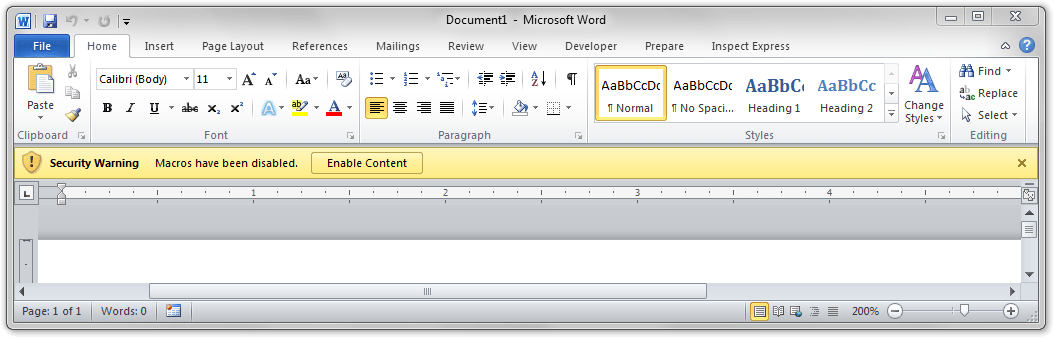
Engineering Malicious Macros
Todays security blog puts forth a litany of eye-glazing Cybersecurity terms like Macro-Laden, OpenDNS, Social Engineering, and its ilk. But stick around till the end, as well detail how hackers continue to exploit both system and human vulnerabilities, and point out a few security layers that exist to foil their attempts.
-

Don’t Leave Hackers A Path To Follow
Don’t leave hackers a path to follow! Encrypting credit card # in POS reader hardware enables secure processing from the start & doesn’t allow malware installation. #pcicompliance
-

Cybersecurity is an Innovation Opportunity & a Way to Find New Revenue Streams
Cybersecurity transcends Technology issues to a core Business focus. Per #KPMG 2017 CEO study, 75% of US CEOs view investment in #Cybersecurity as an Innovation Opportunity & a way to find new revenue streams.