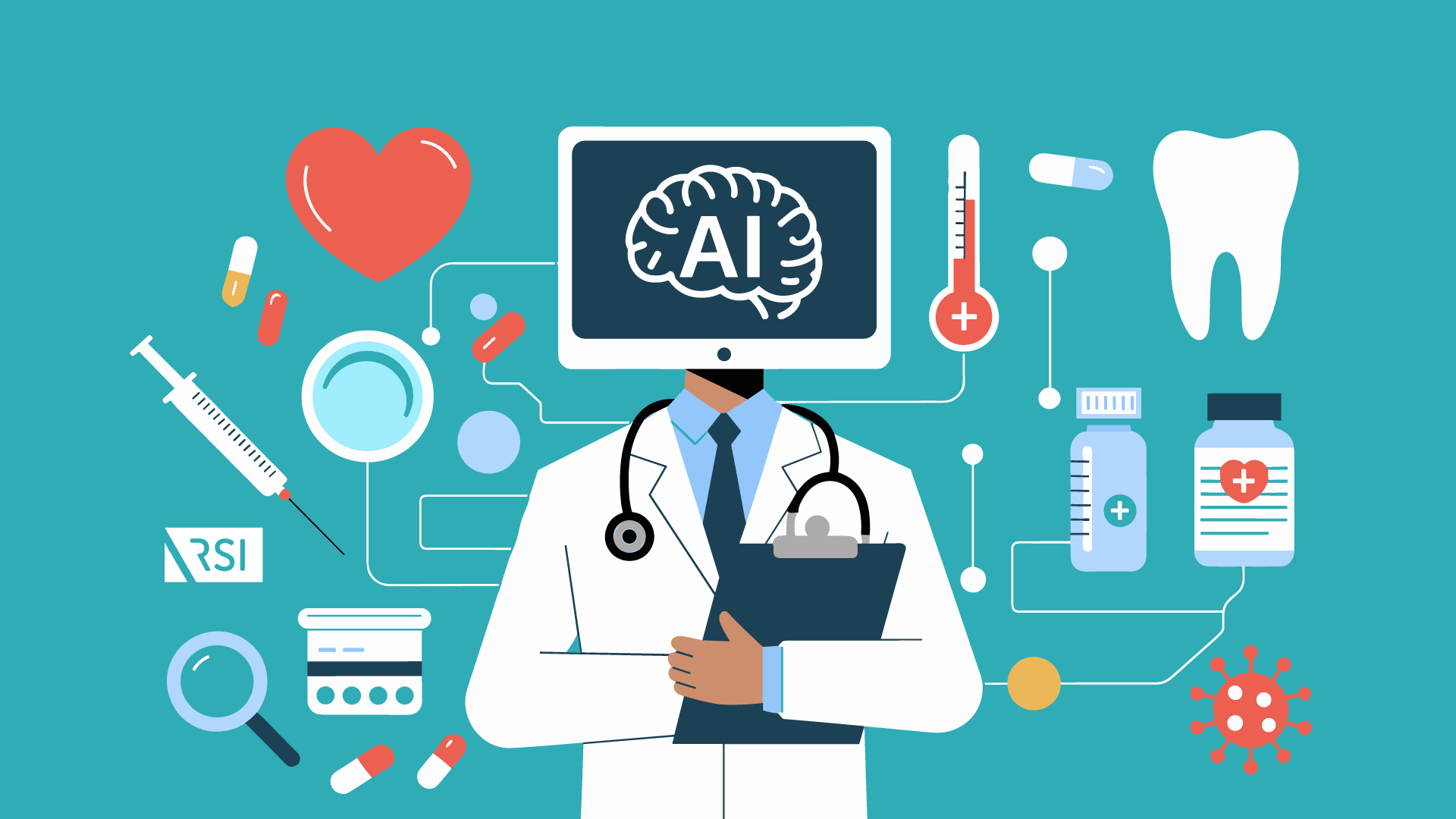
Artificial intelligence (AI) in healthcare is accelerating at an unprecedented pace in 2026, reshaping how organizations deliver care, conduct research, and improve patient outcomes. From advanced diagnostic imaging to AI-driven drug discovery, these technologies are no longer experimental—they are producing measurable, real-world results across the healthcare ecosystem. Building on insights from NVIDIA’s State of AI in Healthcare and Life Sciences report, industry adoption continues to surge, with early successes driving increased investment, expanded use cases, and faster innovation cycles. As AI capabilities evolve—particularly in generative AI and large language models—healthcare and life sciences organizations are entering a new phase of scalable, data-driven transformation.
In this article, we break down the most impactful trends shaping AI in healthcare in 2026 and what they mean for providers, payers, and life sciences organizations navigating this rapidly evolving landscape.
AI Adoption in Healthcare Is Accelerating in 2026
AI in healthcare adoption continues to surge in 2026, with organizations rapidly moving from experimentation to full-scale implementation. According to industry data, 63% of healthcare and life sciences professionals are already actively using AI, while another 31% are piloting or evaluating AI initiatives.
This puts healthcare ahead of most industries, where average AI adoption remains closer to 50%.
Even more compelling, AI is delivering measurable business value:
-
81% report increased revenue
-
Nearly 50% achieve ROI within the first year
-
Operational efficiency and decision-making continue to improve
The takeaway: AI in healthcare is no longer optional—it’s a competitive necessity.
Top AI Workloads and Use Cases in Healthcare
As AI adoption matures, three core workloads are driving innovation across the healthcare ecosystem:
Key AI Workloads
-
Data analytics (58%)
-
Generative AI (54%)
-
Large Language Models (LLMs) (53%)
However, how AI is applied varies by sector:
Leading Use Cases by Industry Segment
-
Medical technology: Diagnostic imaging and analysis (71%)
-
Pharma & biotech: Drug discovery and development (59%)
-
Digital health: Clinical decision support (54%)
-
Payers & providers: Workflow automation and documentation (48%)
These use cases highlight how AI in healthcare is optimizing both clinical outcomes and operational performance.
Generative AI in Healthcare Is Driving Immediate Impact
Generative AI is emerging as one of the most transformative forces in healthcare in 2026. Adoption is already widespread:
-
71% of digital health organizations
-
69% of pharma and biotech firms
-
60% of medtech companies
Top Generative AI Use Cases
-
Clinical documentation and note generation (55%)
-
AI chatbots and virtual assistants (53%)
-
Medical and scientific literature analysis (45%)
-
Drug discovery (62% in pharma and biotech)
Beyond automation, generative AI is fundamentally changing how healthcare organizations operate—reducing administrative burden, improving clinician efficiency, and accelerating innovation in treatment development.

Generative AI NVIDIA
Source: NVIDIA, State of AI in Healthcare and Life Sciences: 2025 Trends, 2025.
Key Value Drivers of AI in Healthcare in 2026
AI in healthcare is delivering value across multiple fronts, but in 2026, three strategic priorities stand out: accelerating innovation, improving patient outcomes, and unlocking actionable insights.
Top Strategic Goals for AI Adoption
-
Accelerate research and development (24%)
-
Improve patient outcomes and quality of care (22%)
-
Generate clinical and research insights (22%)
These priorities highlight a shift from experimentation to results-driven AI adoption, where organizations are focused on measurable clinical and business impact.
Pharma and biotech companies remain the most R&D-focused, with 54% prioritizing innovation and drug development, while payers and providers are placing greater emphasis on patient engagement, clinician efficiency, and operational performance.
Challenges Slowing AI Adoption in Healthcare
Despite rapid growth, AI in healthcare still faces key implementation challenges—many of which vary by organization size.
-
Smaller organizations (<1,000 employees): Budget constraints and limited resources
-
Larger enterprises: Data privacy, security, and sovereignty concerns
These barriers reinforce the need for secure, compliant AI frameworks, especially in highly regulated healthcare environments.
Future Impact: Where AI in Healthcare Is Headed
Even with challenges, confidence in AI remains extremely high:
-
86% say AI is critical to their future
-
83% believe AI will revolutionize healthcare within 3–5 years
Looking ahead to 2026 and beyond, three areas are expected to see the greatest impact:
High-Impact AI Use Cases
-
Advanced imaging and diagnostics (51%)
-
Virtual healthcare assistants and AI agents (34%)
-
Precision medicine and personalized treatment (29%)
These trends signal a future where AI in healthcare not only improves efficiency but fundamentally transforms how care is delivered, personalized, and scaled.

AI ROI in Healthcare Is Driving Increased Investment in 2026
The return on investment (ROI) for AI in healthcare is no longer theoretical—it’s a proven driver of growth, efficiency, and innovation. As a result, organizations are significantly increasing their AI budgets in 2026.
Measurable Business Impact of AI in Healthcare
-
81% report increased revenue
-
73% achieve reduced operational costs
-
41% experience faster R&D cycles
-
78% plan to increase AI spending
These results reinforce a clear trend: AI in healthcare is delivering tangible value at scale, prompting organizations to double down on their investments.
Where Healthcare Organizations Are Investing
-
New AI use cases (47%)
-
Workflow optimization and automation (34%)
-
Hiring AI talent and expertise (26%)
This shift signals a move from early adoption to enterprise-wide AI integration.
The Future of AI in Healthcare: Agentic and Physical AI
Looking ahead, the next wave of innovation in AI in healthcare will be driven by agentic AI and physical AI systems.
-
Agentic AI: Autonomous AI agents capable of decision-making, task execution, and workflow coordination
-
Physical AI: Robotics and intelligent systems powered by foundation models, enabling real-world clinical applications
These technologies are expected to:
-
Reduce clinician workload and burnout
-
Accelerate diagnosis and treatment timelines
-
Enhance surgical precision and automation
-
Improve overall healthcare delivery at scale
In 2026 and beyond, AI in healthcare is evolving from support tools to active participants in care delivery.
Explore Secure and Compliant AI in Healthcare
The latest industry data makes one thing clear: AI in healthcare is not a future disruptor, it’s a present-day necessity.
From clinical documentation and diagnostics to drug discovery and patient engagement, AI is transforming how healthcare organizations operate and deliver care.
However, with rapid adoption comes increased responsibility. Organizations must ensure their AI systems are:
-
Secure
-
Compliant with healthcare regulations (e.g., HIPAA)
-
Ethical and trustworthy
At RSI Security, we help healthcare and life sciences organizations implement secure, compliant, and scalable AI solutions that align with both regulatory requirements and business goals.
Contact RSI Security today to confidently integrate AI into your healthcare environment.
Download Our HIPPA Checklist